
VIDEO HUB

FREQUENTLY ASKED QUESTIONS

From disease education to dosing and administration, browse our video library for a closer look at generalized pustular psoriasis (GPP) and SPEVIGO.
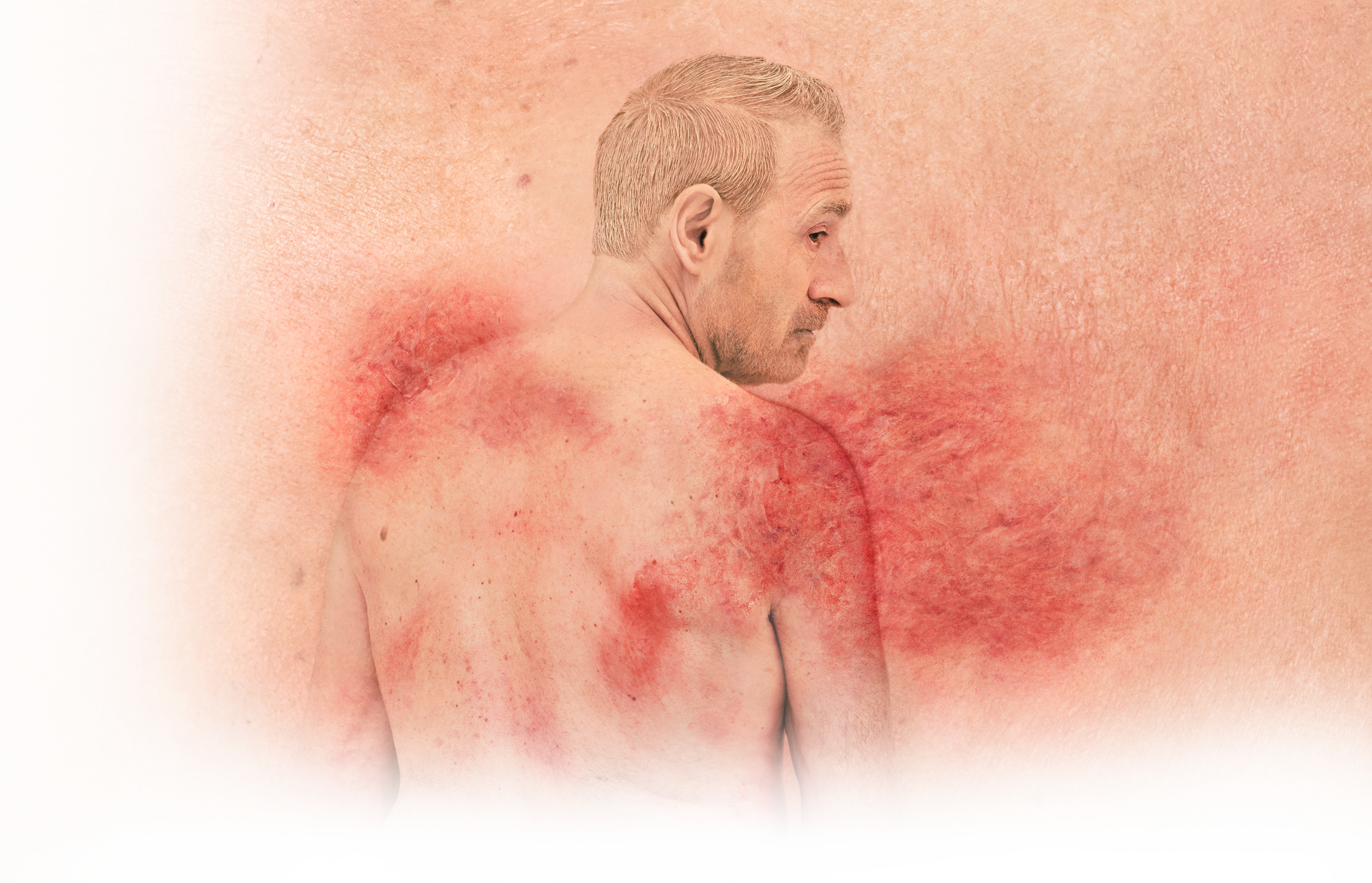
Actor portrayal. Lesions shown have been created with makeup for illustrative purposes only.

Why is it important to treat GPP continuously?

Learn more by watching this video.

Watch expert Dr. Adam Friedman, Professor and Chair of Dermatology at George Washington University School of Medicine and Health Sciences, discuss treatment goals and the importance of continuous GPP treatment.

Please see Important Safety Information below.

Dr. Adam Friedman has been compensated for his time.

Generalized pustular psoriasis, or GPP, is a chronic disease with a high patient burden. GPP is also unpredictable, which means there’s always a possibility of GPP flares because flares can happen at any time. GPP flares usually involve skin symptoms such as pustules, scaling, erythema. But systemic symptoms are common too. These can include fever, malaise, fatigue, joint pain, and even edema.

Between the flares, patients with GPP may also experience ongoing chronic skin symptoms. These can include scaling, crusting, and even erythema. In addition, patients may experience ongoing chronic symptoms such as fever, malaise, fatigue, joint pain, and edema.

For my GPP patients my goals are first, treat any acute flare, second, reduce the risk of a future flare and of course, manage the chronic symptoms of the disease.

Spevigo is the only FDA-approved treatment that addresses the acute and chronic symptoms of GPP. Evidence from the Effisayil® 2 clinical study demonstrates that continuous subcutaneous treatment with Spevigo may help reduce the risk of a future GPP flare. In this clinical trial, Spevigo SC significantly reduced the risk of GPP flares by 84% for at least 48 weeks versus placebo.

Of note, three patients experienced a GPP flare in the first 4 weeks after 1 dose of Spevigo SC treatment. No patients experienced a flare in the Spevigo arm of the trial after week 4 through the end of the trial at week 48.


Why is it important to target the IL-36 pathway in GPP?

Learn more by watching this video.

Watch expert Dr. Adam Friedman, Professor and Chair of Dermatology at George Washington University School of Medicine and Health Sciences, explain the role of the IL-36 pathway in GPP and how SPEVIGO could help treat your patients with GPP.

Please see Important Safety Information below.

Dr. Adam Friedman has been compensated for his time.

The IL-36 signaling pathway is the primary driver in the pathogenesis of generalized pustular psoriasis, or GPP. Pro-inflammatory IL-36 signaling triggers an innate inflammatory response. Spevigo specifically inhibits IL-36 signaling. By binding to the IL-36 receptor Spevigo prevents downstream activation of pro-inflammatory pathways.

For my GPP patients, my goals are simple: to treat any acute flares, reduce the risk of future flares, and of course, manage chronic symptoms of the disease. Spevigo is the only FDA-approved treatment that addresses the acute and chronic symptoms of GPP.


When should I use SPEVIGO (SC) and SPEVIGO (IV)?

Learn more by watching this video.

Watch expert Dr. Raj Chovatiya, Associate Professor of Medicine at Northwestern University, discuss the differences between SPEVIGO formulations and provide guidance on when to use them.

Please see Important Safety Information below.

Dr. Raj Chovatiya has been compensated for his time.

The two formulations of Spevigo address two distinct phases of GPP in adults and pediatric patients 12 years of age and older, weighing at least 40kg. Spevigo IV treats GPP flares. Spevigo’s subcutaneous is used to treat GPP when patients are not experiencing a flare. Based on the clinical trials for Spevigo, a patient experiencing a GPP flare should receive Spevigo as an intravenous infusion to help treat symptoms which may include pustulation, erythema and scaling.

Subcutaneous Spevigo should be given every four weeks to help reduce the risk of a GPP flare. This continuous treatment every four weeks with subcutaneous Spevigo will also help manage your patient’s chronic GPP symptoms after an initial subcutaneous loading dose or IV. If a patient has received Spevigo IV and is continuing treatment with subcutaneous Spevigo, a loading dose is not required.


How long should patients stay on SPEVIGO (SC)?

Learn more by watching this video.

Watch expert Dr. Raj Chovatiya, Associate Professor of Medicine at Northwestern University, clarify how treatment length with SPEVIGO (SC) could translate into continuous benefits for patients with GPP.

Please see Important Safety Information below.

Dr. Raj Chovatiya has been compensated for his time.

Healthcare providers should decide the length of time to remain on subcutaneous Spevigo based on each specific patient case. It’s important to remember GPP is a chronic inflammatory disease with a high patient burden and an unpredictable course that can include recurring flares.

For my GPP patients, my goals are to treat any acute flares, reduce the risk of future flares, and manage the chronic symptoms of the disease. Spevigo is the only FDA-approved treatment that addresses the acute and chronic symptoms of GPP. Evidence from the Effisayil® 2 clinical study demonstrate that continuous subcutaneous treatment with Spevigo may help to reduce the risk of a future GPP flare.

Of note, three patients experienced a GPP flare within the first four weeks after one dose of subcutaneous Spevigo treatment. No patients experienced a flare in the Spevigo arm of the trial after week four through the end of the trial at week 48.

IL-36, interleukin-36; IV, intravenous; SC, subcutaneous.